Sandakphu trekking is considered to be one of the most accessible and at the same time spectacle-filled Himalayan trails which allow the clear sight of four of the highest mountain peaks in the world: Everest, Lhotse, Makalu, and Kanchenjunga. To the United States trekkers who want to experience the high altitude without much difficulty, the trail offers the most favorable blend of the gradual rise and moderate level of difficulty and extensive exposure on the India-Nepal border
This is a beginner-friendly, day-by-day itinerary that includes all the information about the trip in a guide, trail expectations, elevation behavior, weather, and accommodation, and safety guidelines. It maintains simplicity, factuality and easiness of comprehension of the information to first time Himalayan trekkers.
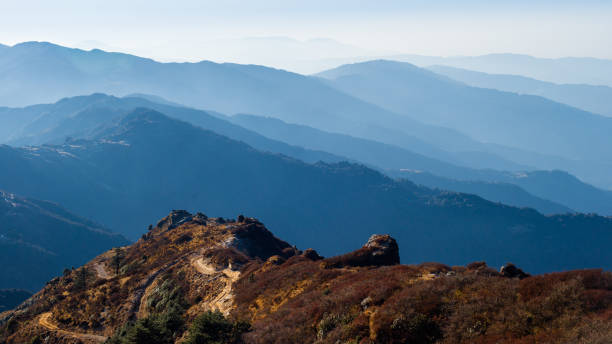
Learning the Sandakphu Trek Route
The Sandakphu trekking is continuous of the well-known Singalila Ridge through which the trekkers hike through an Indian-Nepal border slowly ascending to a height of about 11,930 feet in total. The path goes across forests, villages, open ridges, meadows and panoramic views.
The Reason This Path is a Good Starting Point
• the increase of the altitude is gradual and gentle.
• Tea house accommodation (tents unnecessary)
• Weather consistency during the high seasons.
• Interminable Himalayan perspectives.
Table 1: Sandakphu Trek an Overview
| Category | Details |
| Maximum Altitude | ~11,930 ft |
| Total Distance | 45–50 miles (varies by route) |
| Ideal Duration | 6–7 days |
| Difficulty Level | Moderate |
| Best Seasons | March–May, October–December |
Itinerary of the Sandakphu Trekking day by day
Day 1 – Arrival at Manebhanjan (6,400 ft)
The start of sandakphu trekking is Manebhanjan which can be accessed via Siliguri or Darjeeling.
What to Expect
• Permit verification
• Gear check
• Overnight stay in homestay or Lodge
• Trekkers can also make arrangements of a backup 4×4 land rover in case of an emergency.
Day 2 – Manebhanjan → Tumling (9,600 ft)
Distance: ~7 miles
Time: 6–7 hours
Trail Summary
An ascent of Manebhanjan to Chitrey Monastery by steep ways through the forest and stone trails, and ridge walks.
Highlights
• Border crossing of Nepal first
• Perceptions of Himalayan foothills
• Tea-house overnight stay
Day 3 – Tumling → Kalipokhri (10,400 ft)
Distance: ~8 miles
Time: ~6 hours
Trail Summary
The route is bordered with forests of magnolia, bamboo and rhododendron, and parts of ancient stone-paved roads exist.
Highlights
• The Sleeping Buddha formation in its entirety first seen
• Holy black-water lake of Kalipokhri
• Nepal tea house hospitality
Day 4 – Kalipokhri → Sandakphu (11,930 ft)
Distance: ~4–5 miles
Time: 3–4 hours
Trail Summary
This is the steepest day of sandakphu trekking with bare ridges and high winds.
Highlights
• Sandakphu Sunrise or sunset
• 180 degree of Everest, Lhotse, Makalu and Kanchenjunga
• Lowest over-night point of the trek
Day 5 – Sandakphu → Molley/Sabargram (11,000–11,200 ft)
Distance: ~9 miles
Time: 6–7 hours
Trail Summary
Stunning ridge walk of long length with unending Himalayan wall snow-covered views.
Highlights
• Best photography locations
• Fine open mead and perfected ridge
• Stable trail surface
Day 6 – Sabargram → Gurdum (7,800 ft)
Distance: ~10 miles
Time: 6–7 hours
Trail Summary
Sharp downwards through thick woods and hamlets.
Highlights
• Warmer temperatures
• Rich birdlife
• Homestay experience is comfortable
Day 7 – Gurdum → Srikhola → Manebhanjan Return
Distance: ~6 miles
Time: 3–4 hours
Trail Summary
A simple forest path will take one to Srikhola where the trek is terminated.
Table 2: Distance and Altitude in a day
| Day | Location | Altitude | Distance |
| 1 | Manebhanjan | 6,400 ft | – |
| 2 | Tumling | 9,600 ft | ~7 miles |
| 3 | Kalipokhri | 10,400 ft | ~8 miles |
| 4 | Sandakphu | 11,930 ft | ~4–5 miles |
| 5 | Sabargram / Molley | ~11,000 ft | ~9 miles |
| 6 | Gurdum | 7,800 ft | ~10 miles |
| 7 | Srikhola | 6,000 ft | ~6 miles |
Weather Forecasts on Sandakphu Trekking
Temperature Patterns
• Spring: Chilly mornings, cool days
• Fall: blue skies, freezing nights
• Winter: extremely low temperatures, snowy periods
• Monsoon: Warm but unsafe
Wind Conditions
Strong winds are experienced at Sandakphu and Phalut particularly during fall and winter.
Visibility Patterns
Clear views are best during:
• March–April
• October–November
• Sunrise hours
Accommodation Style
Tea House Features
• Basic bedding
• Simple vegetarian meals
• Shared washrooms
• restricted or sun rays electricity
Network and Charging
• Limited mobile network
• Some villages charge during payment
Physical Conditioning of First-time Trekkers
Physical Expectations
• Ability to walk 7–10 miles daily
• Comfort with steep climbs
• Excellent endurance capacity of the heart
• Capacity to work in cold climate
Pre-Trek Recommended Training
• Hill climbing
• Daily brisk walking
• Squats, lunges, planks
• Light jogging or cycling
Mental Preparation
Trekking in high mountains is a time-consuming process that needs patience. Consistency is valuable as opposed to power.
Table 3: Factors of difficulty rating
| Factor | Level |
| Altitude | Moderate |
| Daily Distance | Medium–High |
| Temperature Variation | High |
| Terrain Type | Riverside: wood, slope, sharp climb |
| Overall Challenge | Manageable with training |
Essential Packing List
Clothing
• Thermal layers
• Down jacket
• Waterproof jacket & pants
• Woolen gloves & cap
• High-ankle trekking boots
Gear
• Trekking poles
• Headlamp + spare batteries
• Water purification tablets
• Power bank
• Sunglasses & sunscreen
Food & Hydration
• Energy bars
• Trail snacks
• Electrolyte packets
Altitude and Safety Issues
Symptoms to Watch For
• Headache
• Dizziness
• Loss of appetite
• Fatigue
Prevention
• Walk slowly
• Hydrate frequently
• Avoid alcohol
• Rest adequately
Quotes for Inspiration
Preparation, rather than speed, is rewarded by mountains.
Easy skies at Sandakphu make labour delight.
A trekker patient gets the most beautiful sights.
FAQs
Can sandakphu trekking be done by novices?
Yes, it is among the least experienced treks in the Himalayas.
What is the summit of the sandakphu trekking?
Approximately 11,930 feet.
The number of days spent in the trek?
7 days or so on the pace and itinerary.
What should be the season of sandakphu trekking?
March–May and October–December.
Do trekkers need a guide?
Not compulsory yet strongly suggested to 1st time users.
Conclusion
The Sandakphu trekking is among the most complete Himalayan adventure trek of newcomers and high altitude walkers. It has moderate level of difficulty, long ridge hikes, tea-house lodging and unparalleled Himalayan perceptions that makes it the best place to visit as a trekker in the United States and have an easy but very fulfilling experience. Even first-time Himalayan trekkers will be able to do it safely and confidently with proper fitness training, knowledge of weather, and planning day by day.