Sandakphu trek is also one of the most scenic mountain trails in Himalayas as it is known to provide uninterrupted view of four highest mountains in the world; Everest, Kanchenjunga, Lhotse and Makalu. The route is close to the Singalila Ridge on the India-Nepal boundary making it a favorite among trekkers who desire clear views of the mountain, safe walking trails and predictable weather. Since Himalayas are subjected to drastic climate changes, it is absolutely necessary to select the right time of the year. This guide contains in-depth seasonal information to assist the American trekkers in scheduling the most appropriate time of the year to make the trip. It is a description of the weather conditions, trail safety, visibility, dangers off-season, and the comfort and the landscape that each month has to offer.
The importance of season selection
The sandakphu trek is also very time-sensitive due to the fact that the trail is covered by thick forests and rhododendron belts, to exposed ridges and open skies. The weather conditions either thy or nye the trekkers with clear views of the mountains or they have to walk in mist and rain. It affects:
• All the major mountain ranges visible
• Snow level on the trail
• Mud, slush, and slipperiness
• Temperature variations
• Wind exposure on open ridges
• Overall safety and comfort
The right season will give a person the best views with minimal weather risks.
Table 1: Season Overview Sandakphu Trek
| Season | Visibility | Trail Safety | Temperature | Overall Experience |
| Spring (March–May) | Excellent | High | Cold mornings, mild days | Best for flowers + views |
| Fall (Oct–Nov) | Excellent | High | Cold days, freezing nights | Best for clear skies |
| Monsoon (June–Sept) | Poor | Low (mud, leeches, landslides) | Warm & humid | Unsafe |
| Winter (Dec–Feb) | Moderate–High | Moderate (snow/ice) | Very cold | Scenic but tough |
Spring Season (March to May)
The spring season is among the most optimal time to do the sandakphu trek since one enjoys a blend between cleared skies and colorful landscapes.
Weather Pattern
The mornings are cold and slowly get hot in afternoons. It is a cold morning with a clear view which can be trusted until noon.
Trail Conditions
The higher points are slightly slushy as the snow of the winter melts in the early spring. Nevertheless, paths which are at an altitude lower than 11,000 feet are dry and can be walked on.
Advantages
• Clarity of Kanchenjunga and Everest
• Magnolia forest and beautiful rhododendron
• Favorable daytime temperatures
• Minimal wind on open ridges
Challenges
• There can be snow-packs in the early spring
• Markedly, it is cold at such locations as Sandakphu and Phalut during the night
Fall Season (October to November)
Fall is the unquestionably best season to the sandakphu trek since clouds are clear and the views of the mountains are excellent.
Weather Pattern
The weather during autumn is dry and stable. The skies are clear nearly all the day, and the air is crisp and clear, and, therefore, the mountain view at a distance is augmented.
Trail Conditions
Until late in November, trails are dry and stable and free of snow. Humidity is lower and this makes walking along ridges easier.
Advantages
• Panoramic view of the finest quality
• Best season for photography
• Minimal chances of rain
• Favorable hiking experience
Challenges
• Nights drop below freezing
• Violent winds in bare ridges such as Sandakphu and Phalut
Table 2: Month by Month Conditions
| Month | Visibility | Temperature | Trail Difficulty | Notes |
| March | High | Cold | Moderate | Snow melting at high points |
| April | High | Mild | Easy–Moderate | Best flowers |
| May | High | Mild–Warm | Easy | Clear mornings |
| October | Excellent | Cold | Easy–Moderate | Best visibility |
| November | Excellent | Very cold | Moderate | Snow begins late month |
Why Monsoon is not a good place to take the trek
The least viable period of the sandakphu trek is the monsoon which takes place in June to September.
Risks
• Continuous rainfall
• Slush and mud all along the path
• Access roads are regularly hit by landslides
• Leeches coming in large numbers to forests
• Fog and complete visibility, concealing great heights
Experience Impact
Trekkers can never see mountains because of clouds and also experience slippery weather and unsafe trails. The accommodation areas are also damp and uncomfortable.
Winter Season (December–February)
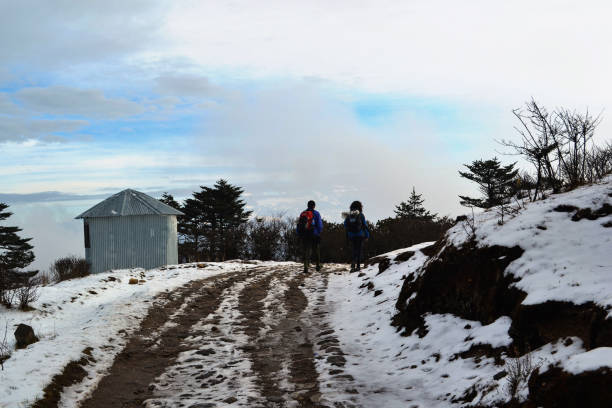
Winter converts the trail into a snow-covered one but makes it considerably more difficult.
Conditions
• Phalut and Sandakphu were covered with heavy snow
• Frozen trail sections
• Low night time temperatures
• Strong winds on ridges
Suitability
Winter is a special reserve of skilled snow-trekking snow-trekking skills and equipment. Novices are not supposed to do this season.
Climatic Conditions that affect Trekking
Temperature
Alternation of the temperature with altitude:
• Lower sections: Mild
• Mid sections: Cold mornings
• Peak experiences (Sandakphu/Phalut): Frosty nights
Wind
The ridge is a strong point of wind. The strongest gusts are fall and winter.
Precipitation
Monsoon has frequent rainfall with winter and late fall having occasional snow.
Visibility
The most obvious one is seen in:
• Early mornings
• October and November
• Mid-spring (April–May)
Peaks Visible
• Kanchenjunga
• Everest
• Lhotse
• Makalu
• Chamlang
• Pandim
Checklists: Before Choosing a Date
Weather Factors
• Temperature range
• Wind strength
• Rain/snow forecasts
Trail Factors
• Mud and slush levels
• Snow at higher camps
• Forest trail moisture
Safety Factors
• Landslide risk
• Slippery ridge sections
• Winter frostbite possibility
Quotes
The Himalayas will reward those who hike at the correct time and not the most difficult time.
Clear skies have more merit than horse in a mountain path.
The sight of things can transform a painful walk into a wonderful experience.
FAQs
Which is the most appropriate time of the year to go on the sandakphu trek?
The best scenery and the most secure paths are in spring (March–May) and fall (October–November).
Could the weather during monsoon season be used to do trekking?
No. Tails get slippery, landslides easily occur and sceneries are not seen.
Can beginners trek in winter?
It should not be used in snow, ice and freezing temperatures.
What is the best month to see the mountain?
October and early November.
Even in good seasons, does it get very cold?
Yes. Lower at Sandakphu and Phalut the temperatures may drop to below the freezing point.
Conclusion
Sandakphu trek is most enjoyable on stable seasons which have clear skies, safe routes and predictable weather. The seasons of spring and fall offer the best conditions to see Everest, Kanchenjunga and other giants of Himalaya besides having the best trail conditions. To the United States trekkers, the beauty of the Eastern Himalayas can be experienced in the right season to prevent the unpredictable storms, treacherous tracks, and poor visibility. It is a memorable high altitude adventure which is safe, rewarding and memorable with proper planning and timing.