State the goechala trek as a visual spectacle of Himalayan trails in Sikkim with the altitude perspective and mountainous scenery with the broad open scenery that lets the photography enthusiasts worldwide envy. American trekkers tend to overrate the effect of elevation, terrain, visibility, and weather on photographic opportunities in the region. The article is well-written and practical and it also gives a clear description of where to get the best shots, variation of visibility with altitude and what times of the day there is the best natural light throughout the trek. Its objective is information correctness.
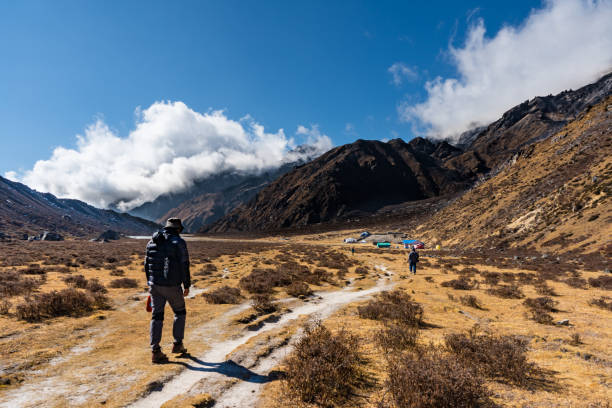
Why Goechala Trek is a Photographers Track
The goechala trek offers the panoramic view of the kanchenjunga range, the golden light viewpoints of the sunrise and the expansive horizons of high meadows. Alterations of altitude also yield other lighting effects like low-lying clouds, diffuse morning light, and slick evening contrast to produce special atmospheric effects. Certain windows are the best on visibility and by knowing these windows, photographers plan.
Table 1: Section Strength of Visibility
| Trek Section | Visibility Rating | Best Time of Photos |
| Yuksom to Tshoka | Morning, moderate | Morning |
| Tshoka to Dzongri | High | Sunrise and sunset |
| Dzongri to Thansing | Very High | Early morning |
| Good bonsoir, Lamuney | High | Mid-day |
| Lamuney to Viewpoint | Very High | Pre-sunrise to sunrise |
The Major Photography Destinations on the Way
The hiking provides a number of natural platforms, meadows and high-altitude ridges on which movement of clouds, the sun, and the visibility of the peaks are integrated together to form ideal photographic opportunities.
Yuksom Forest Entry
Lower elevations offer shaded forest cover, wooden bridges, waterfalls and diffused light that is good in taking the portrait shots. The early morning has mist that makes the photos look and feel soft cinematic.
Best Features to Capture
• Wooden bridges
• Dense green canopy
• Morning mist layers
• Flowing streams
Tshoka Village Ridge
Tshoka has clear skies with openings and a broad ridge on which the sunsets display warm orange hues on the landscape. Symmetrical compositions are made in small ponds through reflections.
Ideal Conditions
• Post-rain clarity
• Low wind for reflections
• Early-evening light
Dzongri Viewpoint (Primary Peak-View Location)
Dzongri is a very iconic photography place throughout the whole goechala trek. The range of Kanchenjunga turns a rich deep gold colour at dawn referred to as alpenglow. The clear seasons can be seen through several Himalayan peaks.
What to Capture
• Kanchenjunga sunrise
• Cloud inversion layers
• Himalayan Himalayan silhouettes in the long-range
• Wide panoramic shots
This is commonly considered to be the most photogenic spot of the whole trek until Goechala Viewpoint is attained.
Thansing Meadow
Thansing presents a level, broad, grassy field with tall mountains which provide great possibilities of landscape composition with depth, scale and contrast.
Key Visual Themes
• Alpine meadow fields
• Clear skyline
• Broad valley frames
Lamuney High Plateau
Lamuney sits on the way to the last upclimb. Pits of snow, bare rocks and moonlit nights offer the drama of low-light photography.
Photographic Potential
• Night sky shots
• Long-exposure images
• Silhouettes upon the bright horizons
Goechala Viewpoint (Summit Photography Point)
The final perspective of the goechala trek provides a close proximity of Kanchenjunga, Kabru and Pandim among other big mountains. There is best visibility at early morning.
Best Subjects
• Kanchenjunga massif
• Snow lines by the dawning sunshine
• Crisp and high contrast edge of the peak
• Trekker silhouettes
Table 2: Optimum Visibility Summary
| Perspective | Optimal Time of Visibility | Maximum Visible Range |
| Dzongri Top | Sunrise | 10/10 |
| Thansing Meadow | Early morning | 8/10 |
| Lamuney Plateau | Mid-morning / Night | 7/10 |
| Goechala Viewpoint | Pre-sunrise | 10/10 |
Weather Conditions That Influence Photography
Temperature
Mornings are colder, and protective items are necessary to cover cameras. At higher altitudes, batteries are exhausted easily.
Wind
There is a possibility that high winds around Dzongri and Lamuney will decrease the tripod stability. Lenses can have their surfaces affected by wind-blown dust.
Precipitation
Low visibility is formed due to rain in forest areas. Snowfall increases the lighting effects and decreases the contrast of trails.
The Issue of Seasonal Visibility
Those are the most appropriate times to take photographs:
• April to early June
• Mid-November through the end of September
The visibility caused by thick clouds remains low during monsoon season. Winter is full of snow blockage and clear sky on clear days which are very rare.
Physical Preparedness of Photographers
The goechala trek requires one to be able to carry personal items as well as the camera equipment. Photographers are required to breathe steadily at high levels and walk long distances with additional weights.
Essential Fitness Needs
• 7–9 miles of walking daily
• Even running on rough surfaces
• Comfort with 5–10 lbs of additional equipment
Photography at High Altitudes Equipment
Camera Gear Checklist
• Weather-sealed camera
• Wide-angle lens (landscapes): This is an expensive item that might not be worth the extra cost unless the photographer requires it regularly and often
• Telephoto lens (for peaks)
• Extra batteries
• Designed for short-lived winds less than 30mph (32km/h)
• Lens cloth and anti-fog wipes
Trekking Gear Checklist
• Waterproof outer layers
• Layered thermal clothing
• High-ankle boots
• Sleeping bag with freezing resistance
• Headlamp
• Water purification tablets
Do not place in the trail a pair of new boots.
Lighting Interaction with Altitude
As the altitude varies, it acts as a change of conduct of sunlight. The higher the elevation, the more intense the UV is, the more intense are the shadows and color saturation.
Photography Effects
• More vibrant blues
• More defined mountain edges
• They have more intense backlight in the morning
• Faster exposure changes
Quotes for Inspiration
Mountains do not wait to have their photos taken, they are giving you one-time experiences, not repetitions.
It is no light thing that sunrise is at the altitude: it is revelation.
The visibility is achieved by being patient, at the right time, and knowing the sky.
Trek Logistics of Photography
Additional planning is necessary to the photographers due to weight and time factors.
Logistics Essentials
• Get up early in case of sunrise pictures
• Have batteries in inner pockets
• Storing memory cards in dry compartments is also advisable
• Crossing rivers — use waterproof coverings
Environmental Responsibility
The goechala trek lies within the alpine and forest ranges that are safeguarded. Photographers are required to do the bare minimum to disturb the ecology, remain on designated paths, and not interfere with the wildlife, and to collect all waste materials and wrappings of equipment.
FAQ
Which is the most appropriate perspective of the goechala trek to take pictures?
The Goechala Viewpoint and Dzongri Top are the best spots in terms of visibility.
Which is the most appropriate time of day to take photographs?
The best time of day is pre-sunrise to sunrise to be seen and give maximum light.
Are inexperienced people able to take photos in an efficient way during this trek?
Yes, provided that physically fit to take altitude and with minimal mountain ready camera equipment.
Does it mean that it is necessary to carry a tripod?
Yes, particularly in the case of sunrise, night photography and long exposure.
Can photography be predicted with respect to the weather?
No. The weather is unpredictable, and the visibility changes on a daily hourly basis.
Conclusion
The goechala trek has provided the trekker with some of the most dramatic Himalayan photography sites. Starting with the forest level mist to the high altitude views of the golden sunrise, the path offers the eastern India scenes that cannot be matched anywhere. Having known weather, visibility, and the altitude effects, as well as the required gear preparation, the photographers will be able to take the shots capturing the stunning high-clarity images throughout the whole trail. With correct planning, there is safety and the best quality of the photographic output on this magnificent Himalayan route.