Identify the goechala trek as a high altitude Himalayan route in Sikkim which needs to have organized preparation, environmental risk awareness as well as precise expectation. The uninformed first-time trekker in the United States estimates the terrain, elevation and weather interaction in the Eastern Himalayas, wrongly. In this article, the operational information on the level of difficulty, trails status on each day, weather behavior in the seasons, and necessary safety factors is provided clearly. Content is concerned with reality as clarity.
Trek Difficulty Overview
Goechala trek is a high-level path, due to the increase in altitude and long periods of walking, as well as constant cold, wind, and varying landscape. The height increases slightly between 5,600 feet at Yuksom and 16,000 feet, which decreases oxygen levels and creates an additional burden of physical effort. The total spent working on hikes is usually between 6 and 9 hours per day. The trail is characterized by mud, rock steps, wooden bridges and areas that are affected by snow and ice at different times of the year. View challenge as a cumulative and not a one-day experience.
Table 1: Indicators of Difficulty
| Factor | Impact |
| Maximum Altitude | ~16,000 ft |
| Daily Trek Hours | 6–9 hours |
| Land form | Forest, rock, moraine, meadows |
| Difficulty Rating | High |
Route Conditions
The conditions of the routes are predictable, depending on the season. Sections of forest at Yuksom are not dry. The elevations increase up to Dzongri and Thansing with steep paths and ridges with exposed areas and lower temperature. Campsites are basic. The higher the altitude the narrower and wind-bared the trails become. The movement should be steady-paced.
Lower-Altitude Sections
Lower parts (Yuksom to Sachen, Sachen to Tshoka) pass through dense forest on wooden bridges, wet soil and narrow paths. Humidity increases fatigue. The leeches come in when the season is monsoon.
Mid-Altitude Sections
Tshoka to Dzongri consists of sharp stair-like uphills and lengthy switchbacks. Here, the depletion of oxygen commences. There is an increase in weather unpredictability. Trekking poles are necessary to achieve stability.
High-Altitude Sections
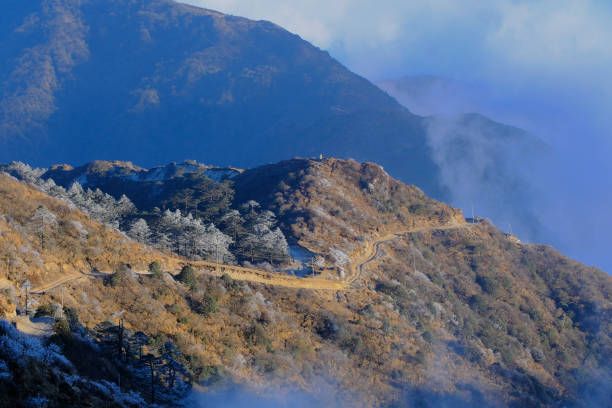
Dzongri to Thansing and Thansing to Lamuney has in it alpine land, moraine areas, and freezing winds. Snow occurs during the spring and fall. Rock surfaces are made unstable. Summit push in the early mornings up till the Goechala viewpoint involves walking in cold temperature and low visibility.
Table 2: Altitude Gradient and Trail Type
| Section | Estimated Altitude | Trail Characteristics |
| Yuksom valley to Tshoka | 5,600–9,700 ft | Forest, bridges, mud |
| Tshoka → Dzongri | 9,700–13,000 ft | Rocky steps, steep ascent |
| Dzongri | 13,000–13,700 ft | Meadows, cold wind, moraine |
| Lamuney → Perspective | 13,700–16,000 ft | Snow patches, bare ground |
Weather Factors
Climatic change occurs suddenly during the goechala trek. Changes in temperature may be between warm and freezing winds that may happen within a few minutes. Afternoons have poor visibility due to fog. The best conditions are in early mornings. During monsoon seasons, heavy rainfall occurs and in the spring and fall, snow falls in the high altitudes.
Temperature
The change of temperatures is sharp as regards the altitude. At the lower altitudes, it is mild, whereas in higher camps, the nights are made up of freeze.
Wind
The intensity of wind is also high in Dzongri and Lamuney. Lying ridges enhance wind chill.
Precipitation
The condition of the trail is dependent on rain and snow. Wet floors augment slip hazards. Heavy snow can mask the path.
Seasonal Behavior
There are two trekking windows, which are stable:
• April to early June
• Mid-November to the end of September
Landslides and visibility are caused by monsoon season (June–September). Winter is associated with deep snow and coldness.
Physical Requirements
The goechala trek requires a regular physical fitness:
• Walking 7–9 miles daily
• Walking up hilly areas without long rest periods
• Breathing at a constant rate in the high altitude
• Transporting day essentials in a daypack
There is the need of cardiovascular conditioning. Training must consist of deep climbs, deep ascents, and power drills.
Equipment Requirements
Every equipment has to be checked and operational.
• High-ankle boots
• Waterproof outer layers
• Layered thermal clothing
• Sleeping bag that is freezing-resistant
• Trekking poles
• Headlamp and additional batteries
• Water purification method
The first time of using the new boots on the trail is forbidden.
Altitude Risk
Alternative sicknesses may occur in physically healthy individuals. There is the indication of altitude stress, as headache, nausea, fatigue, and dizziness are experienced. The two real answers to deteriorating symptoms are descent. Slow pacing and hydration are beneficial and do not prevent risk.
Quotes for Context
Altitude is uncompromising, it challenges preparation.
The avoidance of problems is more with supporting pacing than in strength.
Good equipment eliminates risky situations.
Trek Logistics
The goechala trek takes between 8 and 10 days of trekking including acclimatization. Alternation of altitude risk is expediency. Guides, porters, permits and transportation will all have to be done before arrival in Yuksom.
Permit Requirements
There are preserved forest areas and their permits are obligatory. Foreign trekkers need extra papers. Any trekkers are required to keep records on the permits during the route.
Cost Structure
Price is relative and seasonal and depending on service providers. There are spending categories that are:
• Permits
• Guide and porter fees
• Food and accommodation
• Transport to Yuksom
• Gear rental (if needed)
Budget impacts safety. Reduction of expenditure in vital sectors enhances risk.
Training Expectations
Training must be representative.
• Steep hike practice
• Long-distance walking
• Leg and core strengthening
• Backpack training
• Cardio endurance building
Environmental Responsibility
The goechala trek is located in the reserve forest and alpine areas. Laws demand trail following, litter picking and faithful wildlife. Sikkim has conservation measures in order to preserve the ecological stability of the route.
FAQ
What is the time duration of the goechala trek?
8-10 days with acclimatization.
Should the goechala trek be a beginner trek?
Open to the novices who are well physically prepared.
Which is the most suitable season in which the goechala trek can be done?
April and early June, and late September and mid-November.
Are permits required?
Yes. There are a number of permits required as a result of protected areas.
To what heights do we go?
Perspectives go down to around 16,000 feet.
Conclusion
Goechala trek is a challenging Himalayan path that has to be prepared, taken at a realistic pace, and environmental conditions must be well known. Challenges are caused by arduous walking hours, elevated mountainous terrain and unpredictable weather. Trekking with proper equipment, training, and with the safety measures, trekkers will be able to navigate the terrain and have a full journey to the high altitude in the Eastern Himalayas.